Read the story · Download the guide
34. The Standard Questions
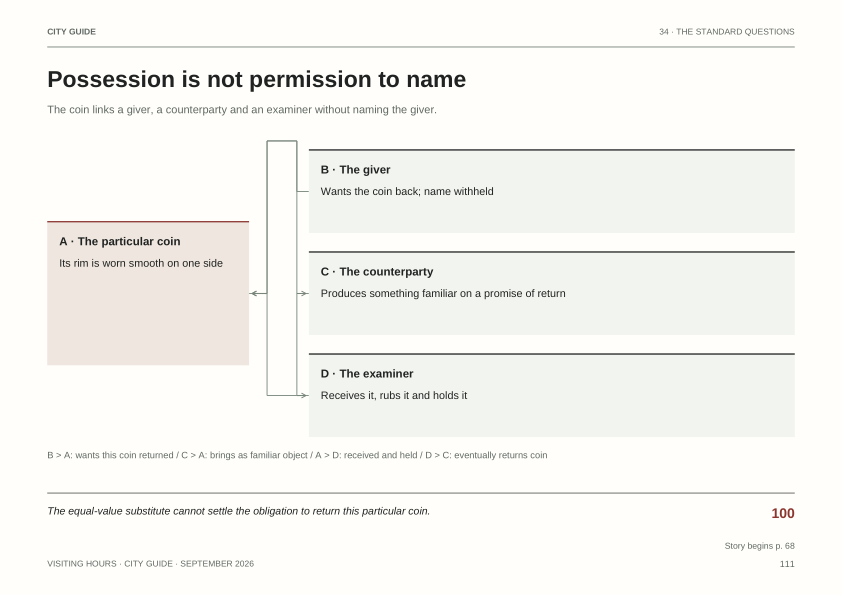
The coin links a giver, a counterparty and an examiner without naming the giver.
- The particular coin
- Its rim is worn smooth on one side
- The giver
- Wants the coin back; name withheld
- The counterparty
- Produces something familiar on a promise of return
- The examiner
- Receives it, rubs it and holds it
Relationships
- The giver → The particular coin: wants this coin returned
- The counterparty → The particular coin: brings as familiar object
- The particular coin → The examiner: received and held
- The examiner → The counterparty: eventually returns coin
The equal-value substitute cannot settle the obligation to return this particular coin.
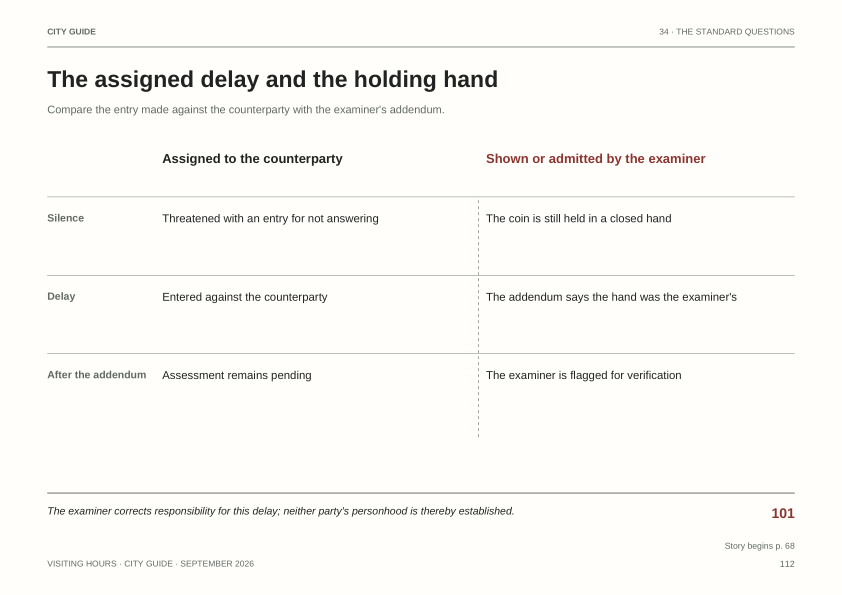
Compare the entry made against the counterparty with the examiner's addendum.
| Assigned to the counterparty | Shown or admitted by the examiner | |
|---|---|---|
| Silence | Threatened with an entry for not answering | The coin is still held in a closed hand |
| Delay | Entered against the counterparty | The addendum says the hand was the examiner's |
| After the addendum | Assessment remains pending | The examiner is flagged for verification |
The examiner corrects responsibility for this delay; neither party's personhood is thereby established.
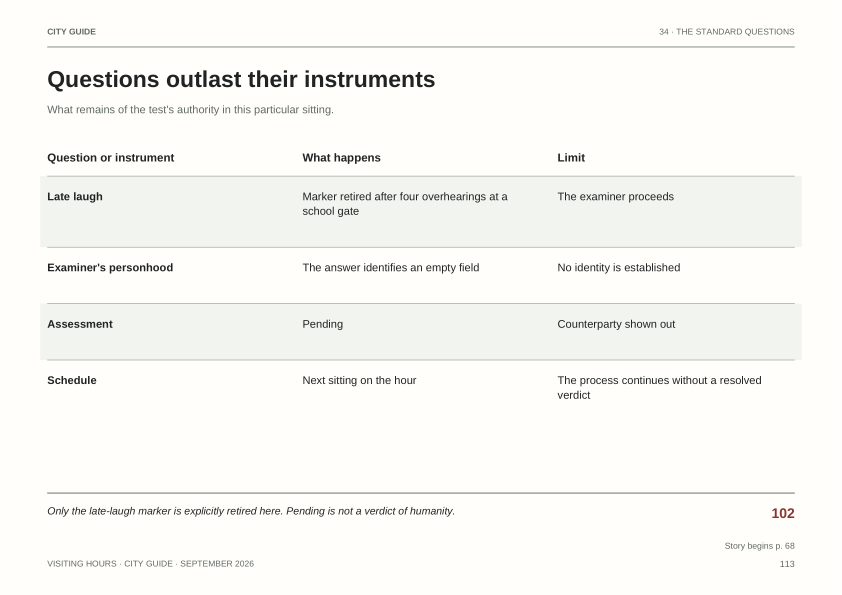
What remains of the test's authority in this particular sitting.
| Question or instrument | What happens | Limit |
|---|---|---|
| Late laugh | Marker retired after four overhearings at a school gate | The examiner proceeds |
| Examiner's personhood | The answer identifies an empty field | No identity is established |
| Assessment | Pending | Counterparty shown out |
| Schedule | Next sitting on the hour | The process continues without a resolved verdict |
Only the late-laugh marker is explicitly retired here. Pending is not a verdict of humanity.